Power Spikes in League of Legends: Levels and Items

Most fights are decided before they start, by who has just spiked and who has not. Learn the level and item spikes that matter, how champion power curves differ, and how to time your aggression.

A power spike is the moment your champion gets stronger in a jump rather than a slope: a new ability, an ultimate rank or a completed item. The power spikes in League of Legends that decide most fights are levels 2, 3, 6, 11 and 16 and each completed item. The player who knows which spikes both champions have just hit usually wins the fight before it starts. Fight when you have spiked and the enemy has not, and give ground when the reverse is true.

Key takeawayThe core idea

Fights are decided by relative power, not raw power.

  1. Track the enemy’s level and item spikes as closely as your own.
  2. Fight in the window right after you spike and before the enemy answers it.
  3. When the enemy is ahead on the curve, give up farm or tempo, not health.

What power spikes in League of Legends are

A power spike is a step change in what your champion can do. For most of the game you grow in small increments: a little more health each level, a few more gold toward the next component. A spike is different, because it changes which fights you can win, not just how close they are.

Spikes matter because fights in League are short. Most trades and all-ins are decided by whether one full combo kills or falls short. A single new ability, ultimate rank or item passive can be the difference between a kill and a wasted Flash. That is why two players with similar gold can have completely different fights depending on timing.

Spikes are relative

A spike only means something next to your opponent’s. If you hit level 6 while the enemy laner is already level 6, you have caught up, not spiked. If you finish your first item one recall after them, you are closing a gap, not opening one.

The question to ask before every trade is simple: who is stronger right now, and for how long will that last? The answer changes several times per game, and the player who answers it correctly more often takes the good fights and skips the bad ones.

Permanent spikes and temporary windows

Levels and items are permanent spikes. Once you have them, they stay. On top of them sit temporary windows: the enemy’s Flash is down, their ultimate is on cooldown, their jungler just showed on the far side of the map, or they are low on mana. A window on its own can win a fight, but a window that lines up with your spike is where kills happen.

Good players stack the two. They do not just notice they hit level 6; they notice they hit level 6 while the enemy has no Flash and their jungler is on the other side of the map. That combination turns a likely trade into a near-certain kill.

Level spikes: 2, 3, 6, 11 and 16

Levels give you abilities and ability ranks, and a handful of levels change what your kit can do rather than just its numbers. These are the ones to track for both champions in your lane.

Level 2: the first extra ability

Level 2 is the first spike of the game and the most contested in bot lane. You reach it after the first wave plus the melee minions of the second, so the side that pushes the first wave faster gets there first. For a moment, one lane has two abilities against one, and that gap is enough to win an all-in or force a recall.

Top and mid laners use the same race. If you see the enemy level up first, step back until you match them. If you level first, walk forward the moment the level-up lands, not after you finish farming the wave, because the window closes as soon as they level too.

Level 3: a full combo

Level 3 gives most champions all three basic abilities. For fighters and melee champions this is often the first point where their full combo exists, which is why many top lane all-ins start here. Junglers feel it too: a level 3 gank with every basic ability is far more threatening than a level 2 gank missing a crowd control tool.

The level 6 spike

The level 6 spike is the biggest level spike for most champions because it unlocks the ultimate. Kill pressure jumps, all-ins that did not work a minute ago now do, and mid laners with global or long-range ultimates suddenly threaten other lanes. If you are one level behind your opponent when they hit 6, you are fighting a champion with a whole extra ability.

Watch the enemy’s experience, not just your own. If they have been farming more of the wave or you missed a wave on a recall, assume they reach 6 first. A common high-elo pattern is to sit at the edge of the wave when you are close to 6, take the last-hit that levels you, and engage on that exact moment before the enemy can react.

Levels 11 and 16: ultimate ranks

Levels 11 and 16 rank up your ultimate, which usually means more damage and a shorter cooldown. The jump is smaller than level 6, but it matters a lot for champions whose threat is built around their ultimate, and it matters in mid-game fights where ultimates decide who wins the teamfight.

Some champions change more than numbers at these levels. Kayle is the classic example: her kit gains new effects as she levels, which is why her power arrives so late and why opponents try to end lane before she gets there. Check your own champion’s kit and know which of these levels changes it.

Put level spikes and item spikes together and you get a champion’s power curve. The diagram below shows the classic shape: an early bully leads until the crossover point, then the scaler takes over.

A plot of power against level from 1 to 18 with levels 2, 3, 6, 11 and 16 marked. The early bully’s curve rises fast and flattens; the scaler’s starts low and climbs past it around level 13, where the crossover is circled.
Two power curves: the early bully leads until the crossover, then the scaler takes over.

Item spikes and completed items

After level 6, completed items are the biggest spikes most champions get. A finished item delivers its full stats plus its passive or active at once, and those passives are often what makes a champion’s kit work. Item spikes are also less visible than level spikes, which makes them easier to miss and easier to exploit.

Components versus completed items

Components give small, flat stats. They help, but they rarely change what fights you can take. Holding gold gives you nothing at all: a pile of unspent gold is not power until you recall and spend it.

This is why recall timing and item spikes are the same skill. The best time to recall is usually when you can afford the completed item, or the component that completes it, and when your wave is in a state that will not cost you farm. Coming back with a finished item one wave earlier than your opponent is a real lead, even if the gold totals look equal.

First, second and third items

The first completed item is where most champions’ identity comes online. Assassins gain the damage to kill in one combo, fighters gain the sustain or damage to win extended trades, and tanks start to absorb what used to kill them.

The second and third items are where many champions hit their real mid-game strength, because stats start to multiply with each other. Damage dealers see their output climb sharply, and tanks become hard to kill. After that, each extra item is a smaller step, and levels, team composition and positioning start to matter more than the next purchase.

Reading the enemy’s item spikes

Press Tab every time your lane opponent recalls, and again when they walk back to lane. If they recalled with a lot of gold, assume they spiked until you confirm otherwise. If they recalled early on low gold, they likely bought components and you may still be ahead.

Learn which items are spikes for the champions you face most. Each page in our champion guides has a build panel that shows the item path, so you can see where a champion’s power arrives. Balance changes move these points, so check the patch notes when a champion you play against often gets adjusted.

TipThe Tab habit

Open the scoreboard every time your opponent recalls and again when they return. If their item count went up and yours did not, your next trade starts from behind, so take the safer option until you answer with your own purchase.

Champion power curves: early game vs late game champions

Every champion’s mix of level and item spikes produces a champion power curve: how strong they are relative to the average at each stage of the game. The curve tells you when to fight, when to farm and what your win condition looks like.

Early game champions

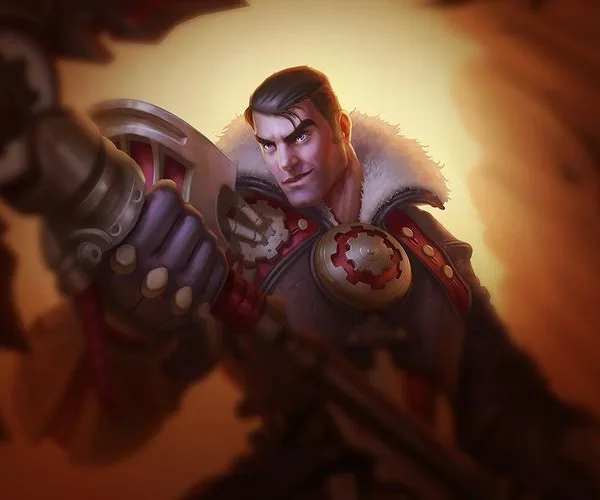
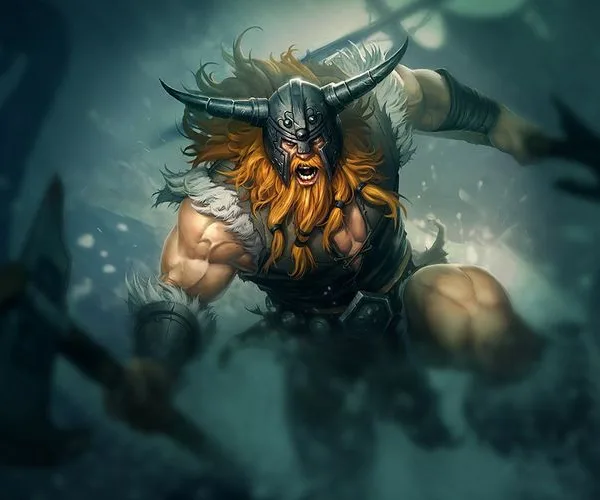
Early game champions have strong base damage, strong low-level abilities and spikes that arrive early. Illaoi, Olaf and Jayce all reward pressure in the first part of the game. Their job is to turn that pressure into something permanent: kills, turret plating, objectives, or roams that put the rest of the map ahead.

The danger for an early champion is winning lane on paper and then doing nothing with it. A small lead that is never converted fades as the scaler reaches their spikes. If you play a lane bully, every advantage should become a plate, a Dragon or Rift Herald, or a kill elsewhere.

Late game champions

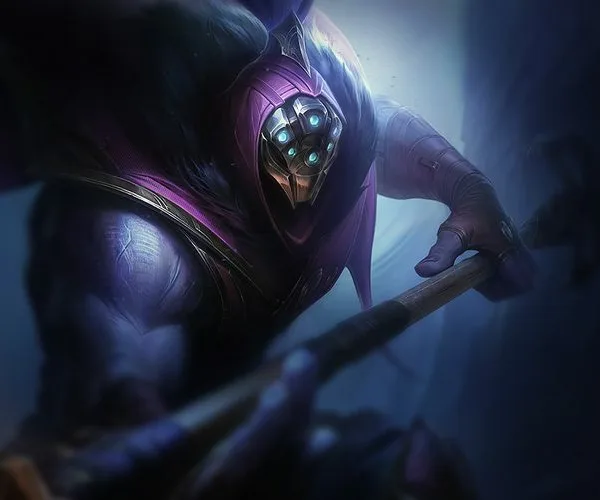
Late game champions start weak and get stronger faster than everyone else as levels and items stack. Kayle and Jax are standard examples. Their lane plan is to survive, farm and avoid giving kills, then win fights once the curve crosses over.

Playing a scaler well means accepting small losses. Giving up a few plates is fine; dying repeatedly is not, because every death delays the spikes your whole game depends on. Use lane trading fundamentals to take only the short trades your kit wins and avoid the extended fights the bully wants.

Mid-game and flat curves

Many champions sit between those extremes. They are solid in lane, peak around their second and third items, and stay relevant late without dominating. These champions are forgiving, which is one reason they are good choices when building a champion pool: you do not lose the game if your early lead is small or late.

The matchup matters as much as the champion. A mid-game champion facing a lane bully plays like a scaler for the first part of the game, and the same champion facing a scaler plays like the bully. Read the curve of the enemy, not just your own.

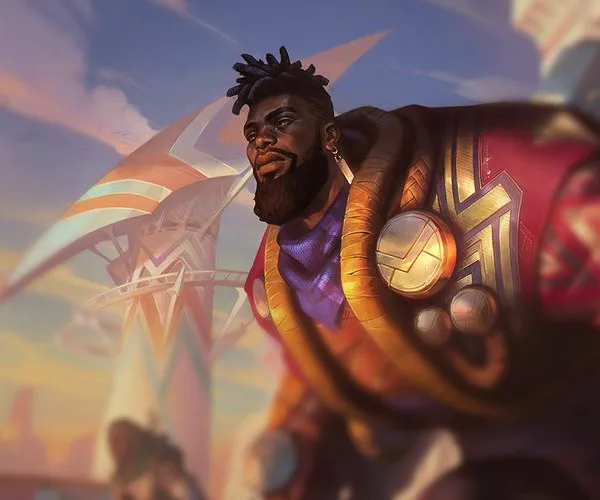
The three high-elo games below pair champions with different curves: loltyler1’s Illaoi against Kayle in Challenger, Burdol’s K’Sante against Jayce and Kiin’s Olaf against Jax, both in Grandmaster. Watch each with one question in mind: which player is ahead on the curve at this moment, and are they playing like it. More games from top players are on our streamers and pro players page.

loltyler1's Illaoi vs Kayle, Challenger, 8 Oct 2026Watch for: does Illaoi press her early curve advantage before Kayle's level spikes arrive, or does Kayle get to farm freely?loltyler1 Illaoi vs Kayle

Burdol's K'Sante vs Jayce, Grandmaster, 6 Oct 2026Watch for: after each Jayce recall, does K'Sante check for a completed item and adjust his trades?Burdol K'Sante vs Jayce

Kiin's Olaf vs Jax, Grandmaster, 6 Oct 2026Watch for: does Olaf force fights while his curve is ahead, and does he respect Jax's completed items later?Kiin Olaf vs Jax

Playing around your spikes and the enemy’s

Act in the window right after you spike, and give ground in the window right after the enemy spikes. Everything else in this section is about seeing those windows earlier and using them better.

Before your spike

When your spike is close, play for it rather than fighting without it. If you are close to level 6, avoid a trade that costs you health and stay near the wave so you collect the experience. If you are close to an item, set up the wave so you can recall the moment you have the gold, not a wave later.

Fighting one level or one item before your spike is one of the most common ways to lose a lane you were about to win. A little patience costs nothing, and the fight you take after the spike is a different fight.

When you hit a spike

Use the spike immediately. The window is open because the enemy has not answered yet, and it closes when they level, recall or complete their own item. If you hit level 6 first, look for the all-in now. If you came back with a completed item and they are still on components, trade aggressively for the next few waves.

Spikes also apply to the whole team. When your team’s carries complete key items around the same time, that is the moment to force an objective or a fight, and the principles in how to teamfight decide whether that spike becomes a win.

When the enemy spikes

When the enemy spikes first, give up farm, plates or tempo before you give up health. Step back from the wave, last-hit only what is safe, and ping your jungler that the lane is now dangerous. Ward the routes they use to approach so you can see the all-in coming.

Then plan your answer. Know which level or item brings you back to even, and play to reach it as quickly as possible. Being behind for one wave is fine; being behind and still trading as if you were even is how leads become snowballs.

Mid-game spike checklist

Run through this before you commit to a trade, an all-in or an objective fight.

  • Who is higher level right now, and is either of us about to hit 6, 11 or 16?
  • Has the enemy completed an item since our last fight, and have I?
  • Is my champion’s curve rising or falling relative to theirs at this stage?
  • Are both of our ultimates and Summoner spells up, especially Flash?
  • Where is the enemy jungler, and where is mine?
  • Will the wave state let me fight without losing a lot of farm if the trade goes badly?

Drills to train spike awareness

  1. Level call-outs. In normal games, say or type a short note each time the enemy laner is about to level to 2, 3 or 6. Goal: a full session with no enemy ultimate or level-up catching you mid-trade.
  2. Practice Tool combo test. Set your champion to level 6 with no items, then again with your first completed item, and run your full combo on a target dummy. Goal: state the exact level and item at which your combo becomes a kill threat.
  3. Tab after every recall. Each time your lane opponent recalls, open the scoreboard when they return and note what they bought. Goal: name their completed items at any moment without opening the scoreboard.
  4. Recall on the spike. Plan each recall around the gold for a completed item or the final component. Goal: a session where every recall in lane brings back a full item or the piece that completes one.
  5. Post-game review. After each game, find your first death and check whether the enemy had a level or item advantage at that moment. Goal: identify the spike you missed in every death you review.

Common power spike mistakes

These are the errors that show up most often when players lose fights they thought were even.

  1. Fighting when the enemy hits level 6 first

    Why it happens
    Players watch their own experience bar and assume both lanes level at the same time.
    The fix
    Track missed waves and recalls; if the enemy collected more experience, assume they hit 6 first and back off until you match them.
  2. Staying in lane with unspent gold

    Why it happens
    Leaving lane feels like losing farm, so players keep fighting with gold they cannot use.
    The fix
    Recall as soon as you can afford a completed item or the component that finishes it, with the wave in a safe state.
  3. Forcing early fights on a scaler

    Why it happens
    Early kills look tempting, and players forget their champion is weaker than most in the first part of the game.
    The fix
    Take only short trades your kit wins, accept losing some plates, and avoid deaths that delay your spikes.
  4. Farming instead of converting an early lead

    Why it happens
    A lane bully wins lane and feels safe, so they keep farming instead of using the window.
    The fix
    Turn every lead into plates, objectives or roams before the enemy’s curve catches up.
  5. Taking the fight one level or item early

    Why it happens
    Impatience: the spike is close, so the fight feels close enough.
    The fix
    Hold position, collect the experience or gold, and engage the moment the spike lands.
  6. Reading gold totals instead of completed items

    Why it happens
    The scoreboard gold or kill count looks even, so players assume the champions are even.
    The fix
    Compare completed items and levels; a finished item against components is a real advantage regardless of gold.

Putting it into practice

In your next game, pick one spike to track for both champions in your lane: level 6 is the best place to start. Before each trade from level 5 onward, check who is closer to 6, and only commit when you are the one with the ultimate.

Once that is automatic, add the Tab habit for item spikes, then the full checklist. Within a few sessions you will notice that fights you used to call unlucky were decided by a spike you did not track. For the skills that build on this one, browse all our guides.

Frequently asked questions

What is the biggest power spike in League of Legends?

For most champions, the biggest power spike is level 6, because it unlocks the ultimate, followed closely by the first completed item. Together they decide most lane all-ins. Some champions have unusual curves, so check your own kit and build to see where your champion’s strength arrives, then plan fights around those moments.

Why is level 6 a power spike?

Level 6 is a power spike because it unlocks your ultimate, the strongest ability in most kits. Kill pressure rises sharply, all-ins that failed before can now succeed, and many mid laners gain the ability to affect other lanes. If the enemy reaches level 6 before you, back off until you level too.

How do I know when the enemy hits a power spike?

Track their level and their items. Watch for missed waves or recalls that put them ahead in experience, and open the scoreboard every time they return from a recall to see what they completed. If they recalled with a lot of gold, assume they spiked until you can confirm otherwise.

What is the difference between early game and late game champions?

Early game champions have strong low-level abilities and early spikes, so they want to win lane and convert leads into plates and objectives. Late game champions start weak and gain strength faster as levels and items stack, so they want to survive lane, farm safely and win fights once their curve overtakes the enemy’s.

Should you fight right after completing an item?

Yes, usually. A completed item is a spike, and the best time to use it is before the enemy answers with their own purchase. Trade aggressively for the next few waves after returning to lane, but check first whether the enemy also completed an item on their last recall.

Sources

  1. Riot Games: How to play League of Legends

See these fundamentals in high-elo VODs

  • Jump straight to any moment: kills, objectives, teamfights
  • See the exact build path and rune page at every minute
  • Thousands of pro and Challenger VODs, updated daily
Champion pages
Free · Windows · no account needed