How to Split Push in League of Legends

Split pushing wins games when your side lane forces the enemy to answer with more than it costs your team. Learn the safety rules, the 1-3-1 and 1-4, and when to group instead.

To split push in League of Legends, take a strong duelist to a side lane, push the wave into the enemy turret, and force the enemy to answer with more than you cost your team. It works when you can win or escape any fight that comes to you while your team stalls or trades elsewhere. It fails when you push without vision, ignore the map, or stay in lane while your team fights an objective without you.

Key takeawaySplit pushing is a trade

You give up your presence in fights to create pressure the enemy has to answer.

  1. Push deep only when you know where the enemies who can reach you are, or can see them coming.
  2. Your pressure only counts when it pulls enemies toward you or turns into a turret, plates or an inhibitor.
  3. Leave the side lane before the objective fight starts, with the wave pushed in, not after it.

How to split push in League of Legends: when it wins games

Split pushing wins games when one player in a side lane creates a problem the enemy cannot ignore and cannot solve cheaply. Every second an enemy spends walking to your lane is a second they are not contesting Dragon, Baron Nashor or the mid lane. If more than one enemy has to come, your team should be ahead somewhere else on the map.

The pressure trade

Think of the side lane as a bill you send the enemy. If a single enemy can hold you off, you have done nothing but farm. If they need two players, or one player plus Teleport, the rest of your team now outnumbers the rest of theirs and should take an objective, a turret or a fight.

This is why the push has to be real. A wave sitting in the middle of the lane threatens nothing; a big wave crashing into the outer turret, with you behind it, threatens plates, the turret and eventually the inhibitor. Read up on wave management first if you are not yet comfortable building a slow push that arrives with enough minions to matter.

Champions and game states that suit it

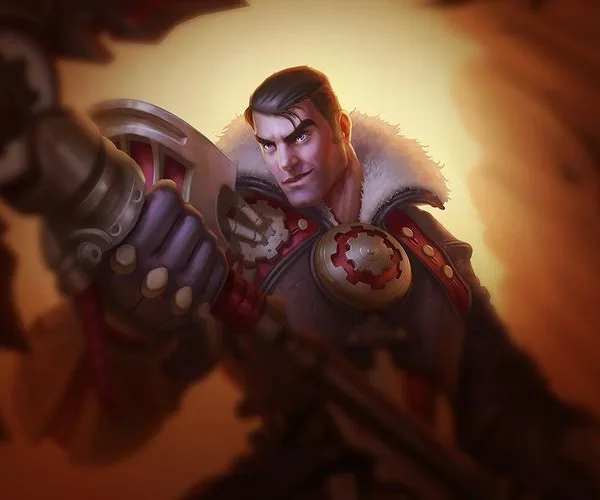
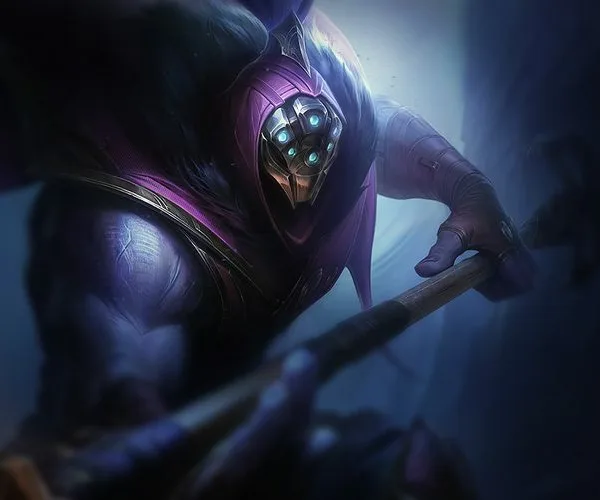
Split pushing rewards champions that win duels, take turrets quickly or escape cleanly. Jax and Kayle grow into duelists few champions want to meet alone late in the game, Illaoi punishes anyone who fights her inside her tentacles, and Jayce takes turrets from range and leaves before help arrives. Check the champion pages to see how your top laner scales and which matchups it wins before you plan a side lane game around it.

Game state matters as much as the pick. You want an item lead or a scaling edge over whoever comes to stop you, and a team that can hold the middle without you through waveclear, disengage or long-range poke. If your team has none of that, splitting leaves them outnumbered at mid while you take a single turret.

How elo changes the answer

In low elo, split pushing is often stronger than it should be. Players chase kills, group mid by habit and answer a pushing side laner late or not at all, so a lead on Jax or Illaoi can end games from a side lane alone. The flip side is that your team rarely plays around your pressure, so you have to finish with a turret, not a stalemate.

In high elo and pro play, the enemy answers fast and with the right champion, often with a jungler waiting in a side lane bush. The side lane becomes a timing tool rather than a win condition on its own. Use the streamers and pro players page to study how Challenger and Grandmaster top laners handle that decision.

Side lane safety: vision and tracking

The side lane is safe exactly as long as you know who can reach you. Most split pushers do not die to the duel; they die to a second or third player who arrives unseen. Vision tells you what is coming, and tracking tells you what could be coming even when your wards show nothing.

Where to ward before you push

Ward the paths enemies use to reach you, not the lane itself. On a side lane, that means the river entrance on your side, the jungle entrance nearest the enemy outer turret and, once that turret falls, the paths through their jungle toward the inner turret. A Control Ward in the side lane bush enemies like to hide in is one of the best uses of gold a split pusher has. The warding guide goes further on placements and timing.

Push only as deep as your vision reaches. If your last ward is at the river, the wave can go into their outer turret, but you stand behind it, not past it. Sweeping with Oracle Lens on the walk down the lane is cheap insurance for champions that need full health to win a duel.

Tracking the enemy team

Count the enemies you can see each time your wave crashes, and ask where the missing ones are. If the enemy mid laner was last seen pushing a wave and has since vanished, they may be walking toward you. If the jungler just showed on the far side of the map, you have a window; if nobody has seen them for a while, assume they are near you.

Teleport changes the calculation. When the enemy side laner who matches you has it up, they can arrive at a turret or ward near you, so treat that cooldown as part of the map. When their Teleport is down, your push is safer and your team gets a numbers edge elsewhere until it comes back.

Run through this checklist before every wave you push past the middle of the lane.

  • I can see, or have recently seen, the enemy jungler.
  • My wards cover the river and jungle entrances nearest me.
  • I know which enemies could reach me first and roughly how long it would take.
  • The enemy side laner’s Teleport and my own are accounted for.
  • My Flash or escape is up, or I am standing behind my wave.
  • My team is not about to start an objective without me.
Watch outMissing enemies are not neutral

When most of the enemy team is missing and your team is not grouped on an objective, back off to your side of the lane. A missing enemy is a threat until you see them again.

The 1-3-1 and 1-4 setups

The 1-3-1 and the 1-4 are the two ways a team builds around side lane pressure. In a 1-3-1, two players push opposite side lanes while three hold the middle; in a 1-4, one player pushes a side lane while the other four stay together near mid or an objective. The diagram below shows how each shape spreads the enemy.

Two maps of the Rift with players as dots and arrows for lane pressure. In the 1-3-1, one player pushes top, three hold mid and one pushes bot. In the 1-4, one player pushes a side lane while four move together through mid.
The 1-3-1 pressures both side lanes; the 1-4 keeps four together with one side lane pushing.

How the 1-3-1 works

The 1-3-1 forces the enemy to defend three lanes at once. They either split up to match you, which hands your best duelist a favorable fight, or stay grouped and lose turrets on both sides of the map. It suits teams with two strong side laners, such as a Jax or Kayle top laner paired with a mid laner or ADC who can hold a lane alone.

It breaks when your middle group cannot hold. If the players in the middle have no waveclear or disengage, the enemy groups, forces a fight in mid and wins it before either side laner can return. In solo queue the 1-3-1 is hard to coordinate, so save it for later in the game, after the outer turrets fall, and use pings to show who is splitting.

How the 1-4 works

The 1-4 is the solo queue default. One side laner pushes, and the other four play near mid, Dragon or Baron Nashor and take whatever the enemy gives up when someone leaves to answer the side lane. It is easier to run because only one player plays alone and the group keeps its numbers for a fight.

The side laner’s job in a 1-4 is to push the side of the map opposite the objective your team wants. If your team is lining up for Baron Nashor, push bottom; if they want Dragon, push top. Defenders then walk away from the objective instead of toward it, and a side laner with Teleport can still join if the fight starts early.

TipTell your team before you split

A quick ping on the side lane you are taking and the objective you expect your team to play toward turns a solo push into a real 1-4. Without it, your team often groups somewhere that helps nobody.

Timing with your team around objectives

Side lane pressure is worth the most in the moments before an objective spawns. Push the side wave in, take what you can, then join or Teleport into the fight while the enemy is still dealing with your wave. Arriving late and alone to a fight your team already started is how split pushers throw leads.

Before the objective: push, then rotate

Start your push early enough that the wave reaches the enemy turret as your team moves toward the objective. A big wave crashing into their outer or inner turret while Dragon or Baron Nashor is up forces a choice: send someone to defend and fight the objective a player down, or let the turret fall. Either answer favors you.

Then leave. Once the wave is in, walk toward the objective by the safest route or hold Teleport for the fight. The objective control guide covers how your team should set up the objective itself.

During the objective: pressure or join

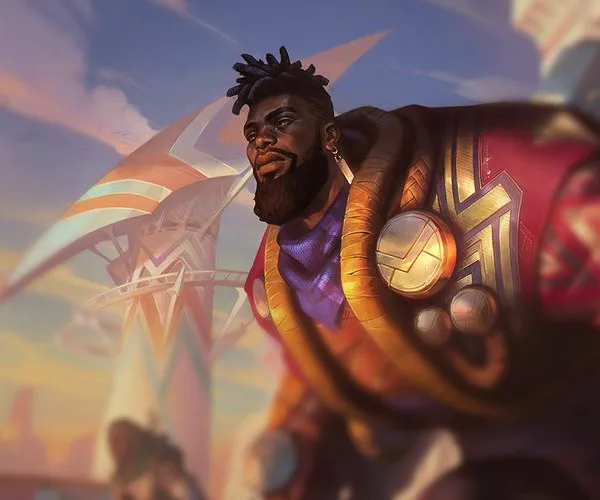
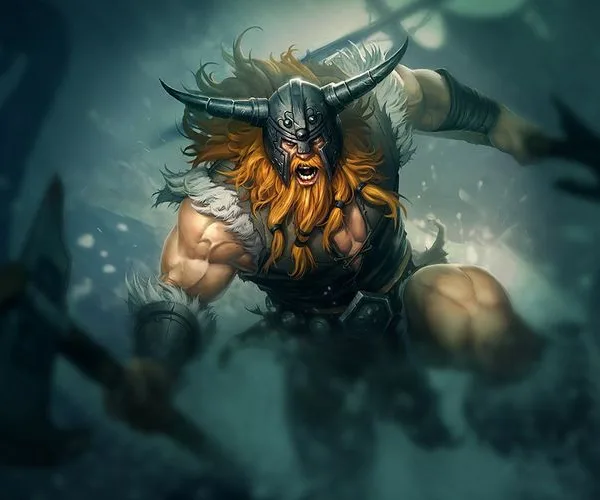
Decide in advance whether you are joining or pressuring, and tell your team. Joining makes sense when the fight is close and your champion swings it, such as K’Sante or Olaf diving into the enemy backline. Pressuring makes sense when your team can stall or give the objective up cheaply while you take an inhibitor or turret worth more than what they lose.

The worst outcome is the half-commit: you keep pushing, the fight starts, you walk toward it too late, and your team loses the objective while you lose the turret you were chasing. If you are not sure, join.

Trading objectives across the map

When the enemy commits to an objective you cannot contest, the side lane is your compensation. If they take Dragon, push the opposite side lane for a turret or plates. If they take Baron Nashor, look for an inhibitor rather than a fight against their buff, because trades like this keep the game close and set up the next objective on your terms.

When to group instead

Group when the next fight decides more than your side lane pressure can win. That usually means Elder Dragon, a contested Baron Nashor late in the game, or an enemy team grouped and sieging your base. Your pressure only works if the enemy has to answer it; when they can win the game before you finish a turret, they will ignore you.

Signs you should group

  • The enemy is grouped and pushing mid. Your side lane cannot outpace a siege on your own inhibitors.
  • Elder Dragon or a late Baron Nashor is about to spawn. One fight decides more than any turret you could take.
  • You lose the duel. If the enemy side laner beats you one-on-one, splitting just feeds them; group where your team protects you.
  • Your team cannot hold without you. With no waveclear or disengage behind you, the enemy forces fights while you are absent.
  • Death timers are long. Late in the game, getting caught in a side lane can cost an objective and a lane before you respawn.

How to group well as a split pusher

Grouping does not mean standing in mid. Push your side wave in before you join so the enemy has to send someone to clear it, and play on the flank of the group where your champion threatens the backline. The guide on how to teamfight covers your role once the fight starts.

Good to knowPatches move the balance

Changes to turrets, Teleport or side lane champions can make split pushing stronger or weaker from one patch to the next. Check the patch notes before you build a plan around your side lane.

Common split pushing mistakes

Most failed split pushes come from the same handful of habits.

  1. Pushing without vision

    Why it happens
    The wave looks free and warding feels like lost time.
    The fix
    Ward the river and nearest jungle entrance before you push past the middle of the lane.
  2. Staying too long

    Why it happens
    A turret is almost down and leaving feels like wasted effort.
    The fix
    Set your leave point before you start: when the objective is close or enemies go missing, walk out.
  3. Splitting on a losing duelist

    Why it happens
    Side lanes feel like the top laner’s job regardless of matchup.
    The fix
    Split only when you win the duel or can escape; otherwise group and let a stronger duelist take the side.
  4. Pushing the objective’s side

    Why it happens
    The lane closest to your team feels safest.
    The fix
    Push the lane opposite the objective so defenders walk away from your team’s fight.
  5. Silent splitting

    Why it happens
    Solo queue players assume teammates read the map the same way.
    The fix
    Ping your lane and the objective you expect your team to play toward.
  6. Ignoring Teleport

    Why it happens
    Cooldowns that happen off-screen are easy to forget.
    The fix
    Track the enemy side laner’s Teleport and treat it as a player who can appear near you.

Putting it into practice

Pick one habit and drill it across several games before adding the next. These drills work in normal games and Ranked Solo/Duo.

  1. The count drill. Each time your wave crashes into a turret, say how many enemies you can see. Goal: a full game where you never push past river while the enemy jungler is unaccounted for.
  2. The ward-first drill. Before each push past the middle of a side lane, ward the nearest river or jungle entrance. Goal: no side lane deaths to an enemy who walked through an unwarded path.
  3. The leave-early drill. When an objective is coming up, push your wave in and leave before your team starts it. Goal: arrive at every objective fight before it begins, or with Teleport ready.
  4. The opposite-side drill. Before each objective, ping the side lane opposite it and push there. Goal: every split push in the game happens on the far side from your team’s target.
  5. The review drill. After each game, list every side lane death and mark whether you had vision, had tracked the jungler and knew the objective timing. Goal: name the missing habit behind each death.
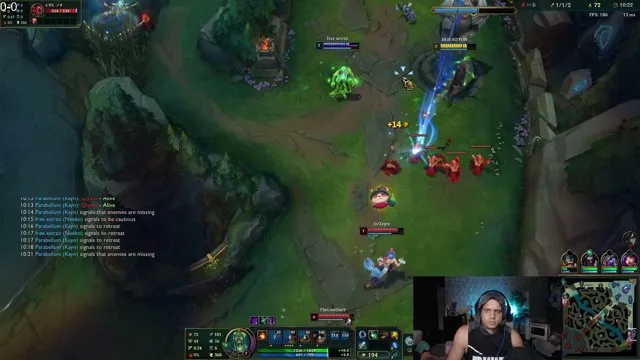
Then compare your habits with high-elo top laners. The games below come from MID.GG’s library; watch each with one question from this guide in mind rather than copying builds.

loltyler1's Illaoi vs Kayle, Challenger, 8 Oct 2026Watch for: does Illaoi have vision of the nearby river and jungle entrances before pushing past the middle of the lane?loltyler1 Illaoi vs Kayle
Burdol's K'Sante vs Jayce, Grandmaster, 6 Oct 2026Watch for: is the side wave pushed into the enemy turret before K'Sante leaves the lane to join an objective?Burdol K'Sante vs Jayce

Kiin's Olaf vs Jax, Grandmaster, 6 Oct 2026Watch for: count the enemies visible on the map each time Olaf pushes past river, and note where the jungler was last seen.Kiin Olaf vs Jax

When split pushing feels routine, browse all guides for the next fundamental to pair with it.

Frequently asked questions

What is split pushing in League of Legends?

Split pushing is sending one player, usually a strong top laner, to push a side lane alone while the rest of the team plays elsewhere. The goal is to force enemies to leave the main group to defend turrets, giving your team a numbers advantage at objectives or in mid.

Which champions are best for split pushing?

The best split pushers win duels, take turrets quickly or escape easily. Jax and Kayle become dangerous duelists late in the game, Illaoi wins fights inside her tentacles, and Jayce sieges turrets from range. Pick a champion that beats whoever the enemy sends to stop you, or the side lane only feeds them.

What is a 1-3-1 in League of Legends?

A 1-3-1 is a setup where two players push opposite side lanes while three hold the middle of the map. It forces the enemy to defend three lanes at once. It works best late in the game with two strong duelists and a middle group that has waveclear or disengage.

When should you stop split pushing and group?

Group when one fight decides more than any turret you could take: Elder Dragon, a late Baron Nashor, or an enemy siege on your base. Also group if you lose the side lane duel or your team cannot hold the middle without you. Push your wave in first so it still pressures the enemy.

How do you split push without dying?

Ward the river and jungle entrances near your lane before you push past the middle, and only push as deep as your vision reaches. Track the enemy jungler and the enemy side laner’s Teleport. When several enemies go missing and your team is not on an objective, back off until you see them again.

Sources

  1. Riot Games: How to play League of Legends

See these fundamentals in high-elo VODs

  • Jump straight to any moment: kills, objectives, teamfights
  • See the exact build path and rune page at every minute
  • Thousands of pro and Challenger VODs, updated daily
Champion pages
Free · Windows · no account needed